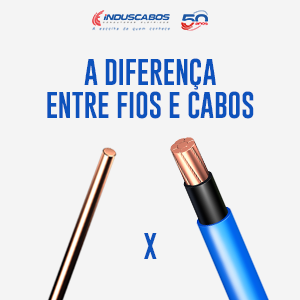
 Flame-retardant cables: where to use them
Electrical safety is one of the pillars of any residential, commercial or industrial installation. When it comes to fire prevention, choosing the right electrical cables makes all the difference. In this scenario, flame-retardant cables emerge as a fundamental solution to increase building safety and minimize risks in emergency situations.
Induscabos develops and manufactures solutions that meet the most rigorous quality and safety standards, offering certified products for applications that require reliability, performance and protection.
What are flame-retardant cables?
Flame-retardant cables are electrical conductors manufactured with special compounds that make it difficult for flames to spread in the event of a fire. Unlike a conventional cable, they have insulating materials capable of interrupting the continuity of combustion after the heat source is removed.
This means that, if a fire starts, the cable does not contribute to the spread of flames along the electrical installation, significantly reducing material damage and increasing the time available for evacuation and firefighting.
Induscabos flame-retardant cables are produced according to technical standards and have mandatory Inmetro certification for low-voltage applications. Induscabos’ Low Voltage Flame-Retardant line fulfills this role, being suitable for fixed civil construction installations, while respecting technical installation and usage standards.
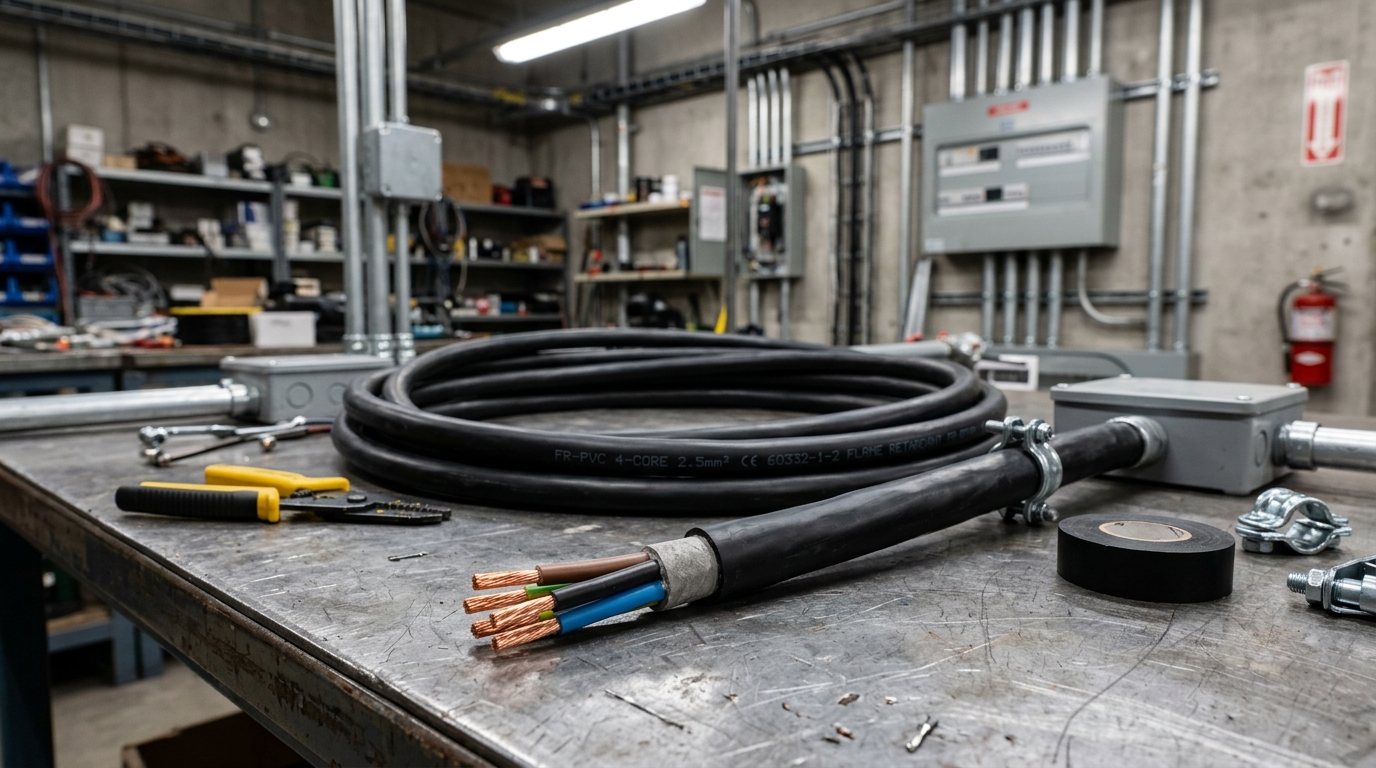
Difference between a conventional cable and a flame-retardant cable
Although they may look similar externally, the main difference lies in the composition of the insulation.
Flame-retardant cables use compounds specially developed to provide characteristics such as:
- Non-propagation of flame;
- Self-extinguishing behavior;
- Greater safety in electrical installations;
- Compliance with Brazilian regulatory requirements.
Conventional cables, on the other hand, may not have the same ability to stop flame propagation, making them a risk factor in fire situations.
What does PVC BWF mean?
One of the most common terms found in electrical specifications is PVC BWF.
The acronym BWF is associated with PVC compounds with flame-retardant properties, developed to provide resistance to fire propagation and self-extinguishing behavior when subjected to specific tests. These characteristics are widely used in building, commercial and industrial installations.
In the Induscabos line, 750 V flame-retardant cables use compounds with these characteristics, providing greater safety for low-voltage applications.
What does self-extinguishing mean?
A material with self-extinguishing characteristics does not continue burning after the source that started the flame is removed.
In practice, this means that the cable stops feeding the fire, reducing the spread of flames through the electrical installation. This property is one of the main advantages of modern flame-retardant cables.
When should HEPR cables be used?
In addition to flame-retardant PVC cables, some applications require superior performance.
In these cases, HEPR-insulated cables, made with high-resistance ethylene-propylene rubber, are an excellent alternative.
Among their advantages are:
- Operating temperature of up to 90°C;
- Higher current-carrying capacity;
- Better thermal performance;
- Excellent mechanical resistance;
- Longer service life in industrial environments.
Because they withstand higher temperatures, HEPR cables allow for more efficient and safer projects in installations with higher technical requirements.
What about halogen-free cables?
In recent years, concern for people’s safety in fire situations has expanded the use of halogen-free cables, also known as LSZH, which stands for Low Smoke Zero Halogen.
These cables offer an important additional advantage: in case of fire, they produce less smoke and do not release corrosive and toxic halogenated gases.
This is especially important in environments with a high flow of people, such as:
- Hospitals;
- Airports;
- Shopping malls;
- Schools;
- Commercial centers;
- Tunnels;
- Data centers.
In addition to making it difficult for fire to spread, halogen-free cables help improve visibility during evacuation and reduce damage to electronic equipment caused by corrosive gases.
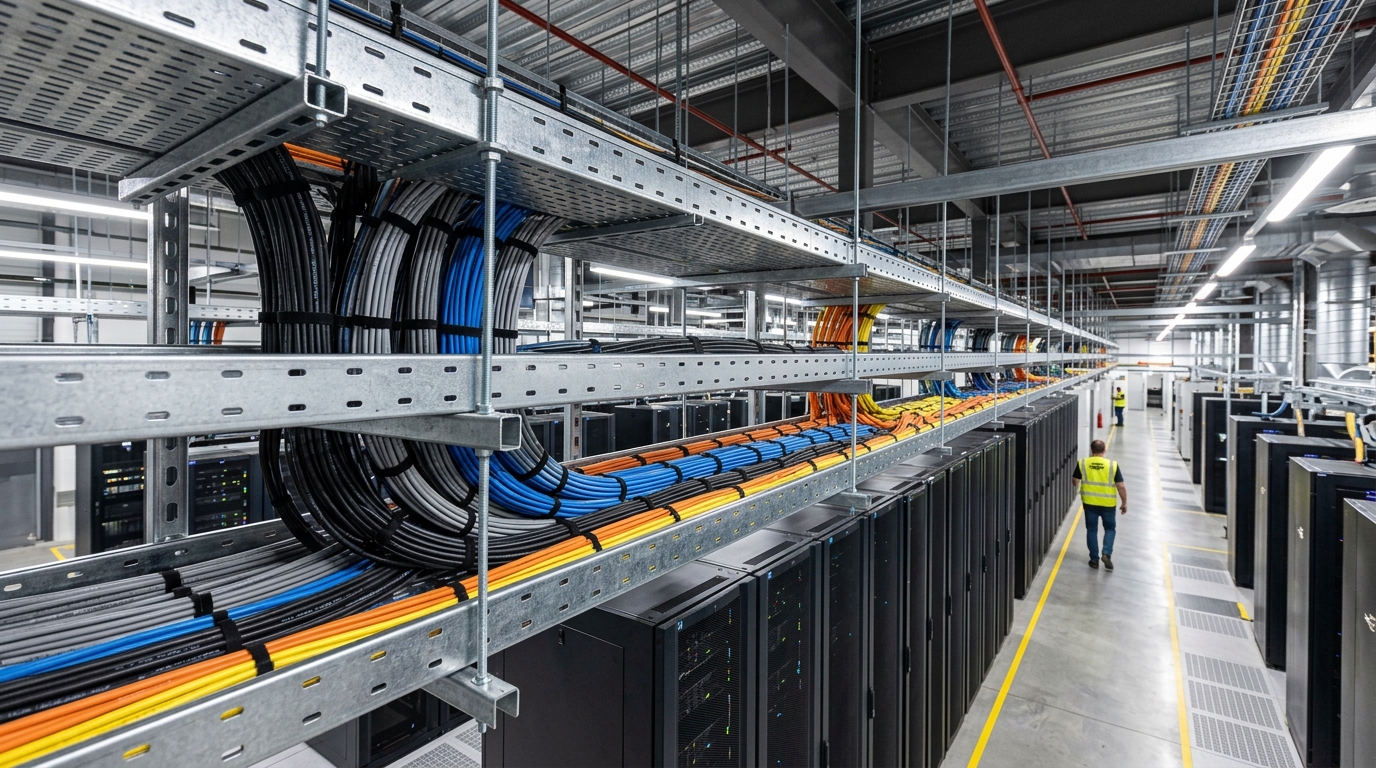
Flame-retardant cable vs. fire-resistant cable
Although they are often confused, these are products with different purposes.
Flame-retardant cable
Its purpose is to prevent or make it difficult for flames to spread.
Fire-resistant cable
It is designed to continue operating for a specified period even under direct fire exposure.
These cables are used in essential emergency systems, such as:
- Emergency lighting;
- Fire alarms;
- Evacuation systems;
- Firefighting pumps.
How to identify a certified flame-retardant cable?
When specifying an electrical cable, it is important to check:
- Inmetro certification;
- Applicable technical standards;
- Rated voltage information;
- Conductor class;
- Manufacturer identification;
- Marking of flame-retardant properties.
Induscabos has certified lines identified according to the technical requirements demanded by the Brazilian market.
Applications of flame-retardant cables
Flame-retardant cables are recommended for:
- Residential installations;
- Commercial buildings;
- Condominiums;
- Industrial warehouses;
- Electrical panels;
- Distribution boards;
- Critical infrastructure.
Their use helps raise the safety level of the installation and meet the requirements of current technical standards.
Safety starts with the right choice
More than conducting energy, an electrical cable must provide protection.
By choosing flame-retardant, HEPR or halogen-free solutions, the designer invests in safety, reliability and technical compliance.
Induscabos continuously works to provide products that follow the evolution of standards and market needs, delivering quality, performance and protection for electrical installations of all sizes. Learn more about our solutions in the Products section of our website.