There is a growing trend towards generating electricity through biogas. This progression has been increasing over the last few years, not only due to the environmental benefits of its production, but also because of its contribution to the safety of system operation.
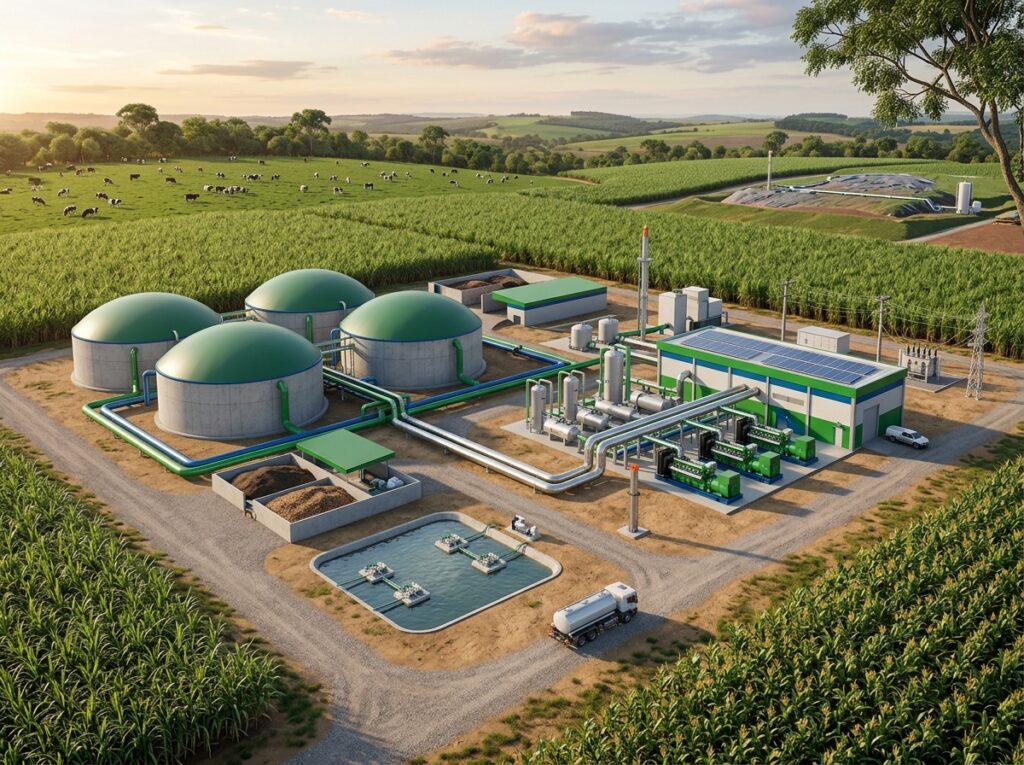
Unlike other renewable sources, biogas stands out for its ability to integrate energy generation with waste management, creating a model based on the circular economy. The decomposition of organic matter during the production of this type of fuel results in the production of methane, which can be used to generate electricity, heat, or even as fuel.
Biogas also differs from other renewable sources in its electro-energetic attributes, having a rapid response to energy load changes and reducing pressure on the finite resources of hydroelectric plants.
The Brazilian context in biogas energy generation
In the Brazilian context, the potential of biogas is especially relevant. The country has one of the largest agricultural productions in the world, in addition to a large volume of waste from landfills and sewage treatment plants. This scenario creates a strategic opportunity to transform environmental liabilities into energy assets. Furthermore, the growth of ESG agendas and the pressure to reduce emissions have driven investments in solutions that promote greater energy efficiency and less environmental impact.
From an operational standpoint, biogas also presents itself as an interesting alternative for distributed energy generation. Companies can produce their own energy from internally generated waste, reducing electricity costs and increasing energy predictability.