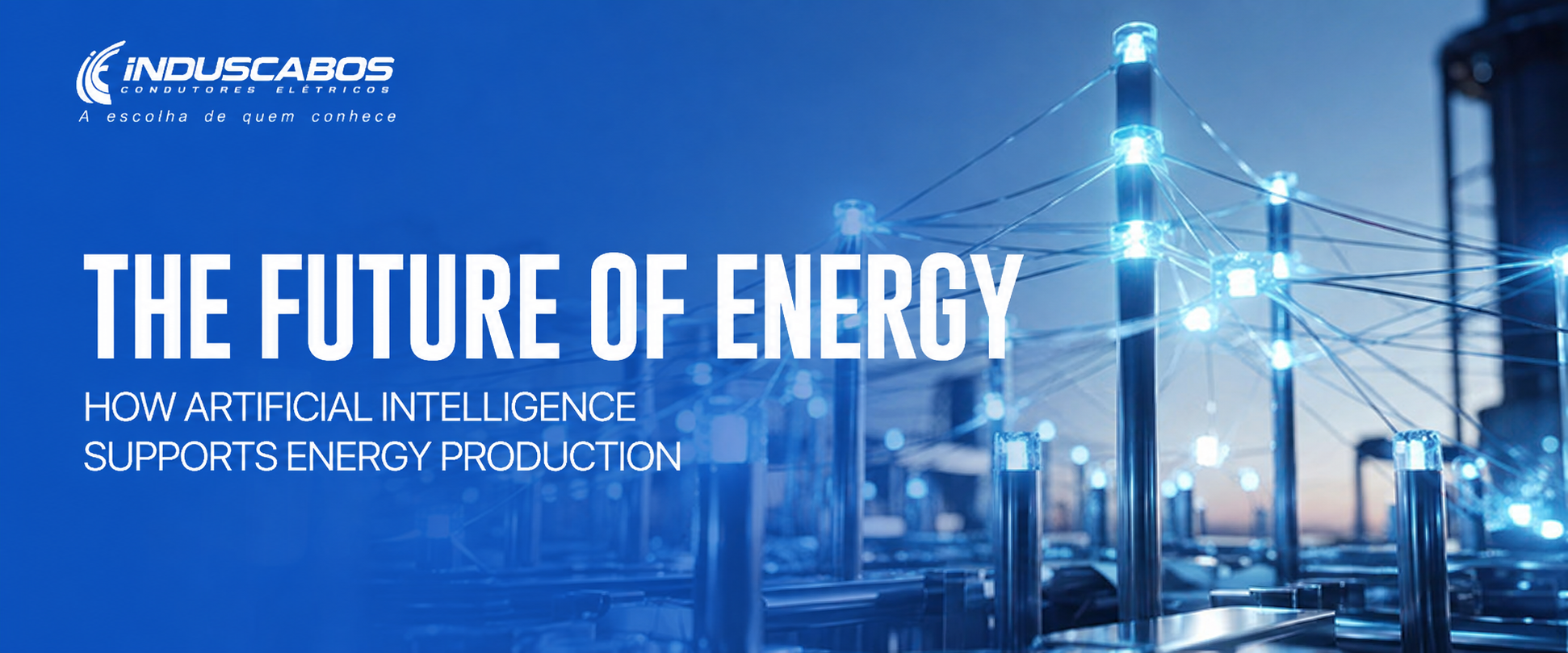
Artificial intelligence in the energy sector has been gaining ground because electrical systems are becoming more complex, more connected and more dependent on real-time data. The combination of distributed generation, variable consumption, storage and distribution networks requires a more precise understanding of operational behavior to support technical decisions with greater consistency.
In this context, the pursuit of energy efficiency and sustainability is no longer only a strategic objective and has begun to influence how projects, operations and maintenance activities are planned. AI in the energy sector helps organize large volumes of information and transform this data into useful analyses for the day-to-day work of companies and operators.
For the B2B market, this means greater predictability, better use of resources and a stronger ability to respond to demand variations, potential failures and changes in the energy mix. At the same time, electrical infrastructure remains the physical foundation that supports this digital evolution.
Artificial intelligence in the energy sector and the new operational complexity
Artificial intelligence in the energy sector has become relevant because today’s energy environment is more dynamic than traditional centralized models. Different generation sources now coexist with varied consumption profiles, storage systems, automation and integration between installations. This increases the number of variables that need to be monitored with technical attention.
When an operation involves generation, consumption, storage and distribution at the same time, manual or isolated data analysis tends to be insufficient to identify patterns quickly. AI helps cross-reference information from sensors, operational histories and performance indicators to support intelligent monitoring and analysis of system behavior.
This approach is especially important in industrial, commercial and infrastructure environments, where small variations can affect efficiency, availability and operating costs. Rather than replacing human work, technology expands analytical capacity and supports better-informed decisions.
Digital transformation in the energy sector is also linked to the need to handle data at greater scale and speed. This applies both to large installations and to networks that need to respond to load fluctuations, renewable integration and service continuity requirements.
How AI analyzes data and supports energy efficiency
One of the main contributions of artificial intelligence is its ability to analyze large volumes of data and identify patterns that are not always evident in conventional inspections. This makes it possible to observe consumption trends, equipment behavior, load variations and signs of operational degradation with greater accuracy.
In practice, this analysis can support energy consumption optimization by identifying peak-demand periods, opportunities for operational adjustments and areas of waste. It can also support intelligent system monitoring by tracking relevant parameters and flagging deviations that require technical verification.
Another important use is predictive maintenance. Instead of acting only after a failure, AI can help anticipate conditions that indicate the need for intervention, supporting planning, reducing unplanned downtime and improving the use of maintenance teams. This does not eliminate risks, but it improves predictability and action prioritization.
- Identification of consumption patterns to support energy efficiency
- Intelligent monitoring of assets and electrical systems
- Support for predictive equipment maintenance
- Reduction of operational waste within realistic technical limits
- Better data foundation for human decision-making
Renewable energy, energy sustainability and sector digitalization
The growth of renewable energy also accelerates the digitalization of the energy sector. Sources such as solar and wind, for example, introduce greater variability and require more refined monitoring to integrate generation and consumption efficiently. In this context, artificial intelligence can help organize operational information and support the balance between supply and demand.
The relationship between energy sustainability and technology is direct. The more efficiently resources are used, the lower the waste tends to be and the greater the ability to make use of existing infrastructure. This is relevant both for new projects and for modernizing installations already in operation.
Sector digitalization does not simply mean adopting software or sensors. It involves creating a reliable data foundation, integrating systems and allowing different areas of the operation to communicate with one another. When this happens, AI becomes a support tool for scenario analysis, action prioritization and performance monitoring over time.
This movement is likely to continue, but gradually and according to the maturity of each project. In many cases, progress depends on adequate electrical infrastructure, connectivity, consistent maintenance and correct specification of the components that support the operation.
Electrical infrastructure, reliability and the role of cables in energy projects
Even with the advancement of artificial intelligence in the energy sector, the physical foundation remains decisive for system reliability. Cables, connections, internal distribution and the organization of electrical infrastructure directly influence operational stability, equipment performance and project safety.
This is especially important in environments that require integration between automation, monitoring and power equipment. The quality of the electrical infrastructure helps reduce interference, support operational continuity and facilitate maintenance throughout the installation’s service life.
For companies working on industrial, commercial or distributed-generation projects, the correct choice of cables should consider the application, environment, voltage level, project requirements and compatibility with the intended operation. In other words, digital transformation also depends on a well-specified electrical foundation.
Induscabos participates in this scenario with electrical cable solutions for low- and medium-voltage projects, as well as applications related to the renewable energy segment. This is relevant because the evolution of the energy sector requires components suited to real field demands while remaining aligned with engineering and electrical safety.
- Low-voltage projects focused on distribution and supplying loads
- Medium-voltage projects with attention to application and expected performance
- Renewable energy applications requiring reliable infrastructure
- Industrial environments that require electrical organization and operational continuity
Conclusion: technology, data and the electrical foundation move forward together
Artificial intelligence in the energy sector should not be seen as an isolated solution, but as part of a broader modernization process. Its value lies in supporting data analysis, improving intelligent monitoring, strengthening predictive maintenance and providing greater predictability for increasingly complex operations.
At the same time, the pursuit of energy efficiency and sustainability continues to drive sector digitalization, the expansion of renewable energy and the need to integrate generation, consumption, storage and distribution more intelligently. In this context, electrical infrastructure remains essential for technology to operate with stability and safety.
For companies that need to align technical performance, reliability and project suitability, correct cable specification is a strategic part of energy evolution. It is this combination of technology, engineering and physical infrastructure that supports the advancement of the sector.
Request suitable cables for energy projects and electrical infrastructure
If your project involves low or medium voltage, integration with renewable energy systems or modernization of electrical infrastructure, selecting the right cables helps support performance, safety and operational continuity. Induscabos serves industrial and B2B demands with solutions aligned with the needs of the energy sector and technical applications.
Request a quote for cables for energy projects