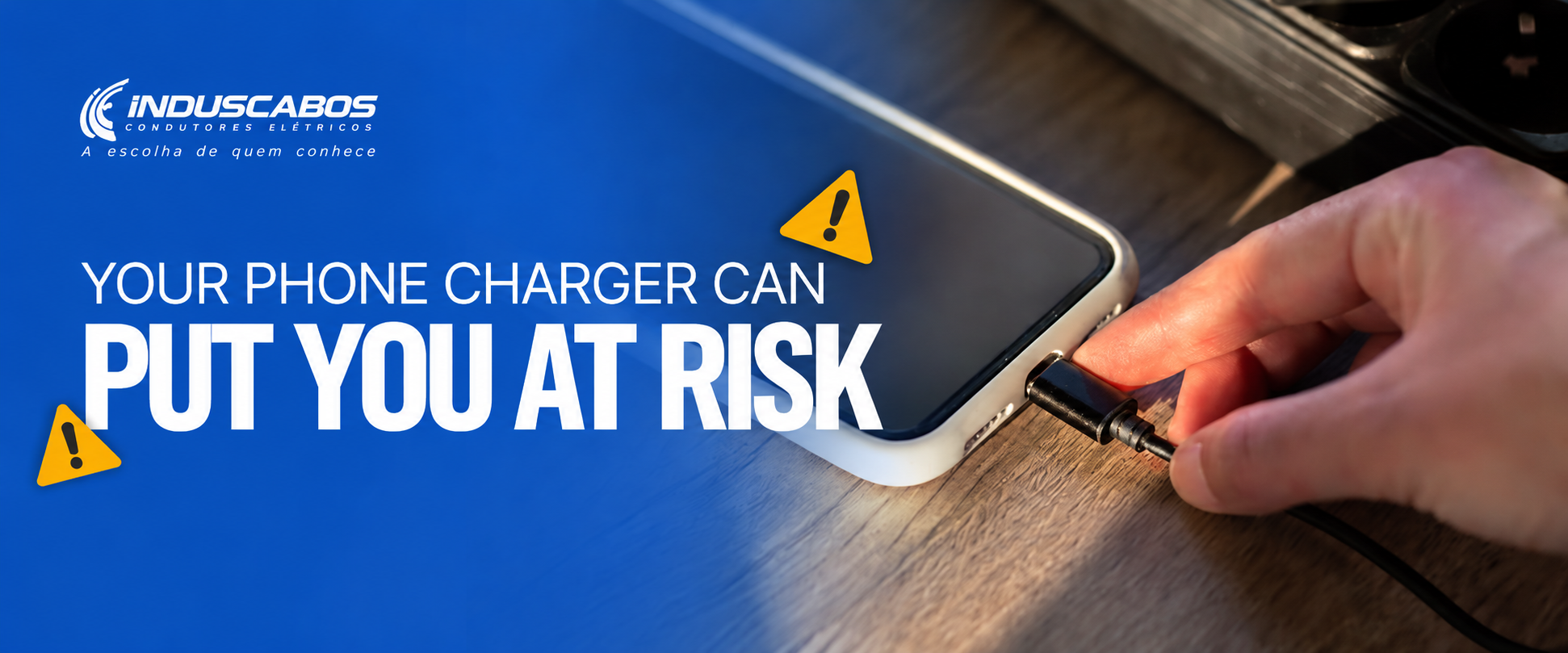
The daily use of a cell phone charger seems simple, but it involves a chain of components that must work together consistently to maintain electrical safety. The final performance does not depend only on the device: the cable, charger, outlet, adapter, and even the condition of the electrical installation influence the result.
When an accessory has manufacturing defects, wear, or incompatibility, charging can stop being a simple convenient routine and start requiring attention. Overheating, poor contact, insulation failures, and short circuits are examples of problems that can arise when component quality is inadequate.
For homes, retailers, installers, and technical buyers, understanding these risks helps guide safer choices. In many cases, the difference between stable charging and a potential hazard lies in the origin and quality of the cell phone chargers and charging cables being used.
Why the quality of the cell phone charger and cable matters
A cell phone charger converts power from the electrical grid into a form suitable for charging the device’s battery. This process depends on internal components, insulation, thermal control, and compatibility with the cable and the device. When any part of this system is poorly designed or made with inferior materials, the safety margin is reduced.
Low-quality chargers may show excessive heating, performance fluctuations, and insufficient protection against electrical faults. This does not mean that every third-party product will cause an accident, but it does mean that the origin and construction of the accessory make a real difference in everyday use.
The cable also plays a central role. Cell phone cables with loose connectors, weakened insulation, or damaged conductors can cause energy losses, interruptions during charging, and increased temperature. In more critical situations, wear can develop into a short circuit or a point of abnormal heating.
In corporate environments, stores, construction sites, and facilities with high foot traffic, this care is even more relevant. Choosing certified, compatible products from reliable sources reduces operational risks and avoids frequent replacements caused by premature failures.
Risks associated with counterfeit chargers and low-quality accessories
Counterfeit chargers and accessories without consistent manufacturing controls can fail in basic safety requirements. The problem is not only their external appearance, but also the system’s ability to handle current, dissipate heat, and maintain electrical insulation throughout use.
Among the most common risks are overheating, insulation failure, short circuits, and the possibility of fire. A charger that becomes excessively hot may indicate operation beyond expected limits, insufficient ventilation, or unsuitable internal components. A cable with compromised insulation may expose conductors and increase the risk of electric shock.
It is also important to check adapters and extension cords used during charging. When these items do not have quality compatible with the required load, they can cause poor contact, heating at outlets, and instability in the power supply. In some cases, the problem develops gradually, with a burning or overheating smell, unusual noise, or intermittent interruptions.
- Overheating of the charger, cable, or outlet
- Insulation failures with risk of contact with energized parts
- Short circuit caused by internal or external damage to the accessory
- Fire risk when heat is not dissipated properly
- Malfunction caused by incompatibility between charger, cable, and device
In any scenario, the central point is the same: electrical components need to be compatible with one another and suitable for the application. When this logic is ignored, the risk increases even if the device appears to work normally at first.
Signs that the cable or charger should be replaced
Some signs indicate that the accessory should no longer be used. Ideally, use should be stopped as soon as there is evidence of wear, abnormal heating, or loss of performance. Waiting for the problem to worsen can turn a simple failure into a more serious incident.
For the cable, watch for exposed wires, sharp bends, dried or cracked sections, bent connectors, and charging interruptions when the cable is moved. These symptoms show that its mechanical and electrical integrity has already been compromised.
For the charger, signs such as a burning smell, unusual noise, excessive heating, dark marks, and an unstable fit in the outlet require immediate attention. If the accessory behaves irregularly, the safest approach is to replace it with a product from a reliable source.
It is also worth checking the environment where the accessory is used. Dust, moisture, excessive heat, and loose outlets can accelerate wear. Even a good-quality accessory needs suitable conditions to operate safely and maintain the expected performance.
- Do not use cables with exposed wires
- Do not continue using damaged connectors
- Do not ignore signs of abnormal heating
- Do not use chargers with a burning smell or dark marks
- Replace accessories that fail with slight movement
Good practices for charging your cell phone every day
Charging safety depends on simple but consistent habits. The first is to use cell phone chargers and charging cables that are compatible with the device and the application. Compatibility is not only about the physical connector; it also involves electrical capacity and the thermal behavior of the system.
Another important precaution is to avoid placing a charging device on surfaces that hinder heat dissipation, such as fabrics, pillows, mattresses, or very enclosed areas. The heat generated during charging needs to circulate and dissipate properly so it does not build up excessively.
It is also recommended not to bend the cable forcefully, pull it by the wire when disconnecting it, or improvise repairs on damaged cables. Instead of patching them, the safer choice is to replace the accessory with one in good condition.
When charging is frequent in offices, service areas, stores, or shared spaces, it is useful to establish a visual inspection routine. This practice helps identify wear before it becomes an operational or safety problem.
- Use compatible products from reliable sources
- Avoid surfaces that retain heat during charging
- Inspect the cable and charger regularly
- Replace accessories showing signs of wear
- Avoid improvised and non-recommended repairs
What precautions should be taken when leaving a cell phone charging overnight
The question of leaving a cell phone charging overnight is common. Modern devices and chargers generally include management and protection systems that reduce the risk of overcharging when the system is appropriate and in good condition. However, this does not eliminate the need to pay attention to the quality of the accessories being used.
The main issue is not the time of day itself, but the condition of the cell phone charger, cable, and outlet. If there is wear, abnormal heating, poor contact, or use of products from unreliable sources, prolonged charging can increase exposure to the problem.
Therefore, when charging overnight, it is best to keep the system on a stable surface, with reasonable ventilation, and away from materials that retain heat. It is also advisable to avoid overloaded extension cords and adapters of uncertain origin.
In summary, overnight charging is not a problem by itself. The level of safety is determined by the quality of the system as a whole and the absence of signs of failure in the components being used.
Electrical safety starts with small components and extends to the installation
The topic of the cell phone charger helps illustrate a broader principle of electrical safety: the reliability of a system depends on the quality of the components that make it up. In a simple charging setup, this includes the cable, connector, charger, outlet, and conditions of use. In a complete electrical installation, the same logic applies, only on a larger scale.
When conductors, connections, and accessories are selected carefully, the system tends to operate with greater stability, better performance, and a lower risk of failures. When excessive cost-cutting affects critical items, the chances of heating, interruptions, premature wear, and safety problems increase.
For the B2B market, this perspective is especially important. Retailers, distributors, installers, and companies that specify electrical components need to consider not only the initial cost, but also field reliability, durability, and the impact of failures on end use.
Therefore, choosing suitable products should not be treated as a minor detail. It is part of a risk-prevention strategy and the creation of safer and more efficient electrical environments.
Conclusion
Safety when using a cell phone charger depends on a combination of factors: charger quality, cable integrity, compatibility with the device, and proper conditions of the electrical installation. When one of these elements fails, the system loses reliability and may experience overheating, short circuits, insulation failures, or other risks associated with improper use.
Watching for signs of wear, avoiding damaged accessories, choosing products from reliable sources, and respecting proper heat-dissipation conditions are simple measures that make a difference. The same principle applies to any electrical system: component quality is an essential part of safety and performance.
Specify electrical components with greater safety to reduce risks in use and installation
If your operation requires reliability in cables, conductors, and electrical components, it is worth considering correct specification from the outset. The right choice helps reduce failures, improve field performance, and support projects that depend on consistent electrical safety across different applications.
Request a quote for cables and electrical solutions for your application