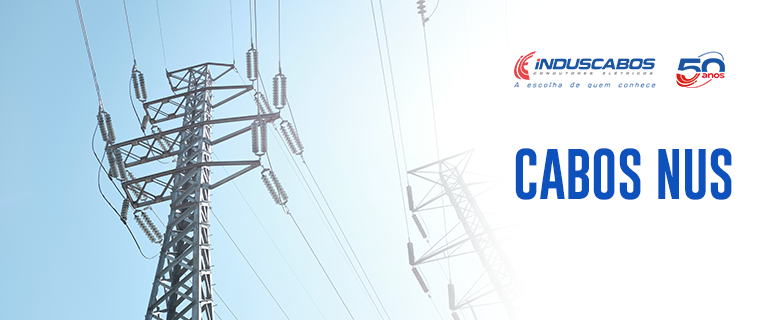
Bare copper and aluminum conductors are present in several essential applications for the transmission and distribution of electrical energy. Installed in overhead lines, substations, grounding systems, and even buried in certain applications, these conductors remain exposed daily to the action of nature.
Heavy rain, solar radiation, sudden temperature changes, humidity, and contact with the ground are part of the routine of these materials. But after all, how do they maintain their performance even under such severe conditions?
Resistance starts with the choice of material
The secret lies in the natural characteristics of the metals used.
Copper is recognized for its excellent electrical conductivity, high mechanical resistance, and great durability. Aluminum stands out for its combination of low weight, good electrical conductivity, and excellent cost-benefit ratio, making it one of the main choices for overhead transmission and distribution lines.
Each material has specific characteristics that meet different project needs, always considering technical criteria such as current-carrying capacity, mechanical stresses, and environmental conditions.
What happens when it rains?
Contrary to what many people imagine, rain does not represent a problem for correctly specified bare conductors.
These conductors are developed to operate in outdoor environments for many years. Their construction and the materials used allow continuous exposure to water while maintaining their electrical and mechanical properties within the expected operating conditions.
In addition, both copper and aluminum exhibit behavior that contributes to their durability against natural corrosion processes.
And what about the heat of the sun?
Cables installed outdoors remain exposed daily to solar radiation and high temperatures.
Even under these conditions, copper and aluminum preserve excellent electrical conduction properties. Naturally, like any conductor, their electrical resistance undergoes small variations with temperature, a factor already considered by electrical projects and technical standards.
For this reason, the correct specification takes into account not only the electrical current being carried, but also the environmental conditions where the conductor will be installed.
Resistance also below ground
In specific applications, such as grounding systems, conductors may remain buried for long periods.
In this environment, the soil presents different levels of moisture, mineral salts, and chemical characteristics that can influence the behavior of materials over time.
For this reason, choosing the right conductor and ensuring correct installation are essential to guarantee long service life and reliable performance.
Durability that supports the entire operation
More than carrying energy, bare conductors must provide reliability over decades of operation.
Their resistance to climate variations, combined with the natural properties of copper and aluminum, allows these conductors to be used in critical applications, contributing to safety and continuity of the power supply.
At Induscabos, each conductor is developed following rigorous quality standards, offering solutions for a wide range of applications in the electrical sector.
Because when it comes to energy, resistance, performance, and reliability go hand in hand.
Induscabos. Reliable solutions for exposed and demanding applications.
Induscabos develops bare copper and aluminum conductors focused on electrical performance, durability, and reliability for transmission, distribution, substations, and grounding applications.
Our team is prepared to support your company in choosing the most suitable solution for the technical needs of each project, taking into account environmental conditions, operational requirements, and installation safety.
Count on Induscabos to specify conductors prepared to face weather, environment, and operation.
Request a quote