One of the most common questions when it comes to cables is: what type of cable can I install in my home? There are many types of electrical cable cross-sections, with different voltage ratings that often cause confusion when purchasing cables for residential installations.
Without realizing it, you may be purchasing a cable with a cross-section that is larger or smaller than what your equipment requires, which may compromise your installation. Therefore, in this article we will explain the differences between each electrical cable cross-section and which type of cable to install in your home.
Applications of Low-Voltage Cables in Residential Installations
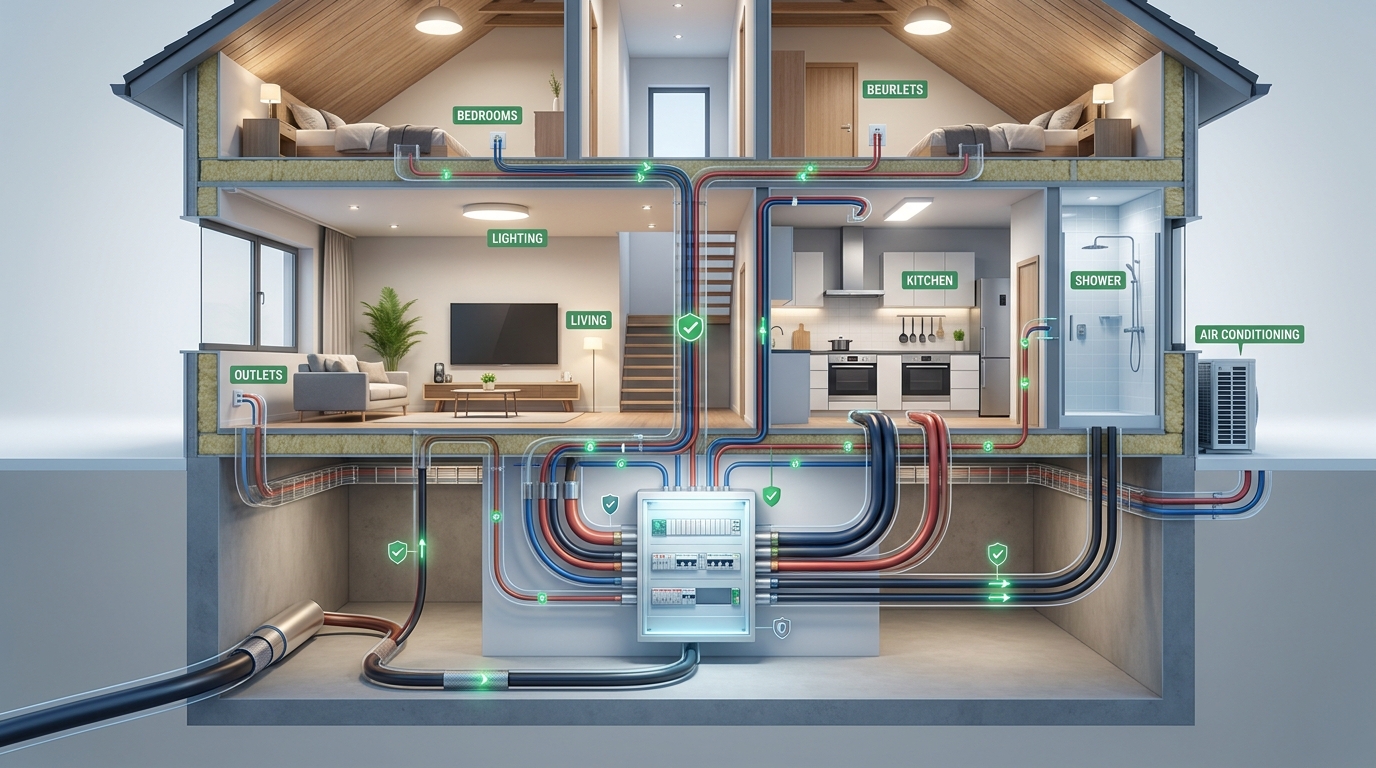
Choosing the electrical cables and the cross-section to be installed in a home is essential to ensure safety, proper operation and energy efficiency. Each residential circuit has a specific electrical current demand, requiring suitable conductors to withstand the load without risk. We call this cable sizing. Correct sizing prevents the installation from becoming ineffective during use.
1.5 mm² Cables: Lighting Circuits
1.5 mm² cables are generally used in residential lighting circuits. The most common applications for this type of cable are:
- Lighting in living rooms, bedrooms and hallways;
- Chandeliers and pendant lights;
- Recessed spotlights;
- LED strips;
- Outdoor lighting for gardens and balconies;
- Motion sensors and automated lighting systems.
Since the current demand in these circuits is usually low, 1.5 mm² cables provide excellent performance with economy and safety. For this type of installation, discover Induscabos Duflex cables, an excellent solution for your home.
2.5 mm² Cables: General-Purpose Outlets (TUG)
This is the standard cross-section required by technical standards for conventional outlet circuits. The most common applications are:
- Bedroom outlets;
- Living room and office outlets;
- Televisions;
- Computers and laptops;
- Fans;
- Chargers and electronic devices;
- Vacuum cleaners;
- Small household appliances.
Induscabos Solution: Induscabos 2.5 mm² flexible cables provide smooth pulling through residential conduits, easily supporting the everyday demand of these common outlets.
4 mm² Cables: Higher-Power Equipment
These cables are recommended for circuits that supply appliances requiring slightly higher electrical current. They can be used for:
- Dedicated kitchen outlets;
- Lower-power electric ovens;
- Microwave ovens;
- Dishwashers;
- Washing machines;
- Compact clothes dryers;
- Lower-capacity air conditioners;
- Dedicated circuits for specific household appliances.
Induscabos Application: our cables are manufactured with 100% copper in the conductor composition, ensuring that the installation is not exposed to overload risks or outside NBR standards.
6 mm² Cables: Showers and Air Conditioners
Many people are wary of these appliances because they are often considered the villains of residential energy consumption. 6.0 mm² circuits require robust cables with high thermal resistance, which is why they can be used for larger, higher-power equipment. The most common applications are:
- Electric showers;
- Electronic showers;
- Electric faucets;
- Medium-capacity split air conditioners;
- Electric ovens;
- Electric cooktops;
- Residential heaters.
For these installations, it is necessary to pay attention to the reliability of the cable being purchased, as undersized cables with a higher PVC composition and a smaller amount of metal in the conductor, outside the established standard, may cause damage more serious than simply burning out an appliance. Undersized cables sold at prices far below the market average may cause fires at the installation site.
10 mm² to 16 mm² Cables: Main Power Supply for the Home
The 10 mm² and 16 mm² cross-sections are normally used in the main electrical supply of the installation, connecting the service entrance to the distribution board. They are frequently used for:
- Supplying the main distribution board;
- Residential service entrance conductors;
- Supplying secondary distribution boards;
- Homes with high energy consumption;
- Systems with multiple air-conditioning units;
- Homes with electric heating and high-power equipment.
These cables are responsible for carrying high currents safely and efficiently.
25 mm² to 35 mm² Cables: High-Consumption Residential Projects
The 25 mm² and 35 mm² cross-sections are generally used in large homes, high-end condominiums and installations that require higher electrical loads.
- Supplying homes with high energy consumption;
- Larger main distribution boards;
- Photovoltaic systems;
- Supplying pumps and motors;
- Electric vehicle chargers;
- Fully electrified gourmet areas;
- Heated swimming pools and advanced home automation systems.
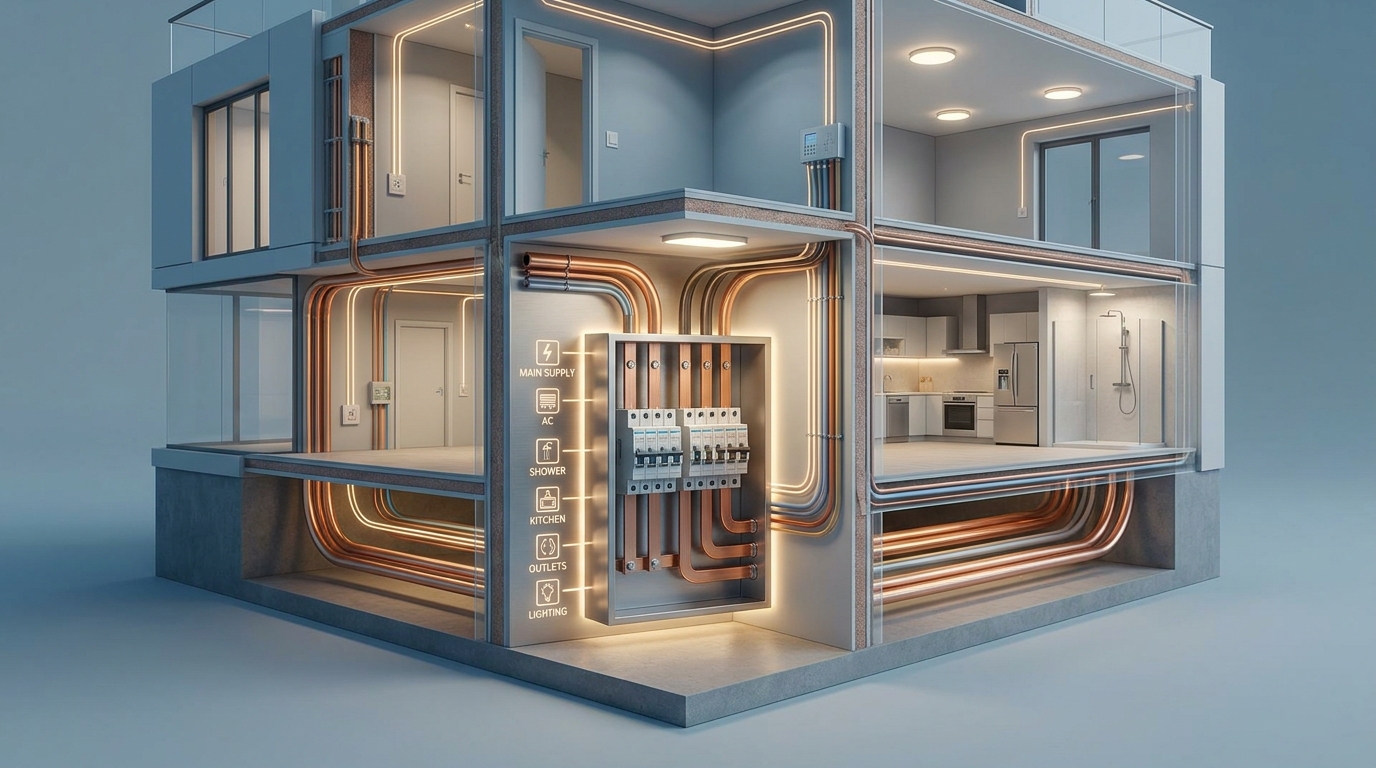
Correct Cable Sizing Is Essential
The appropriate cross-section must always be determined by considering factors such as electrical current, circuit distance, voltage drop and the requirements of NBR 5410. Using correctly sized cables increases the service life of the installation, reduces energy losses and protects people and equipment. With a complete portfolio of low-voltage cables, Induscabos offers solutions for every stage of a residential installation, from lighting circuits to the main power supply of the home, ensuring quality, safety and performance in every project. Do you have any questions about the sizing and application of our electrical cables? Send us a direct message on Instagram. We will be happy to assist you.
Find the Right Cables for Your Residential Installation
From lighting to the main power supply of your home, count on Induscabos to choose high-quality electrical cables developed to provide safety, performance and reliability in different applications.
Request a Quote for Residential Cables