When buying electrical cables, you can’t treat them like just any item. The right choice directly impacts the safety, performance, and even the cost of your operation. Therefore, understanding what to evaluate before buying makes all the difference. In this guide, we’ll get straight to the point to help you choose safely and confidently.
Sizing: the starting point
The first point, and one of the most important, is sizing. An undersized cable can cause overheating, damage, and even serious risks. To get it right, it’s essential to consider the electrical current, the installation distance, and the environmental conditions. This combination ensures that the cable will perform well in everyday use.
Technical specification: each application requires a cable.
Another essential factor is the technical specification. Each application requires a specific type of cable, especially when we talk about medium voltage, which operates under more demanding conditions. Here, there’s no room for improvisation: always check if the product meets market standards and certifications.
Quality: a choice that avoids problems.
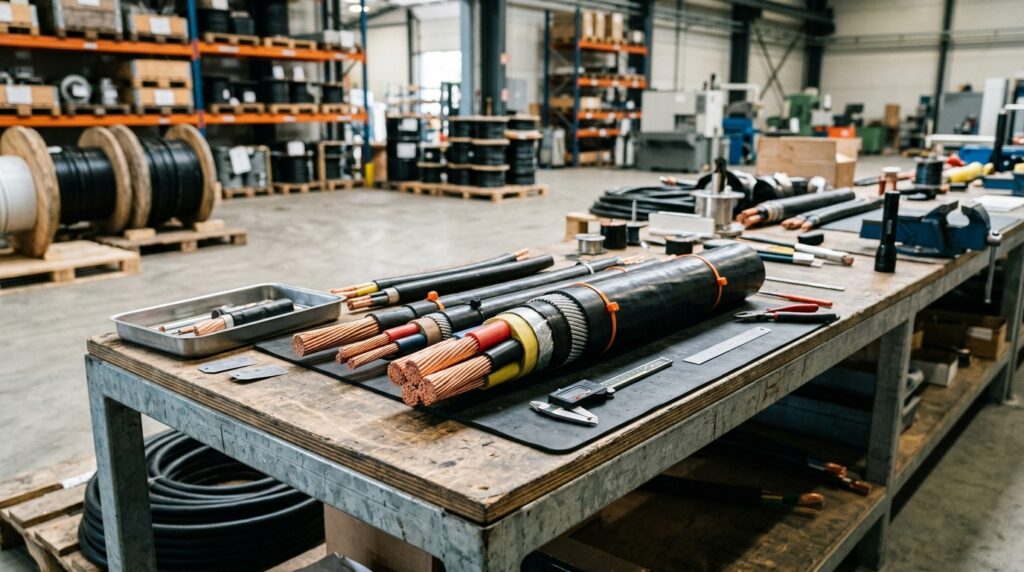
Quality is not optional either. Choosing cables from reliable sources is an investment in peace of mind. Always check the cable production process, how they are stored, and what type of material is used in their manufacture. Low-quality products can lead to unnecessary failures, downtime, and risks. Therefore, working with established manufacturers, such as Induscabos, makes all the difference in the final result.
Durability: Prepared for the real environment.
Cable strength also needs to be considered. In more aggressive environments, for example, lightweight cables stand out for their greater resistance to abrasion and chemical agents. Evaluating these characteristics prevents premature replacements and ensures greater durability.
Installation: practicality that generates savings.
Installation is another factor that directly impacts the project. More flexible and easier-to-handle cables speed up the work, reduce costs, and facilitate application, especially in more complex spaces or those with physical limitations.
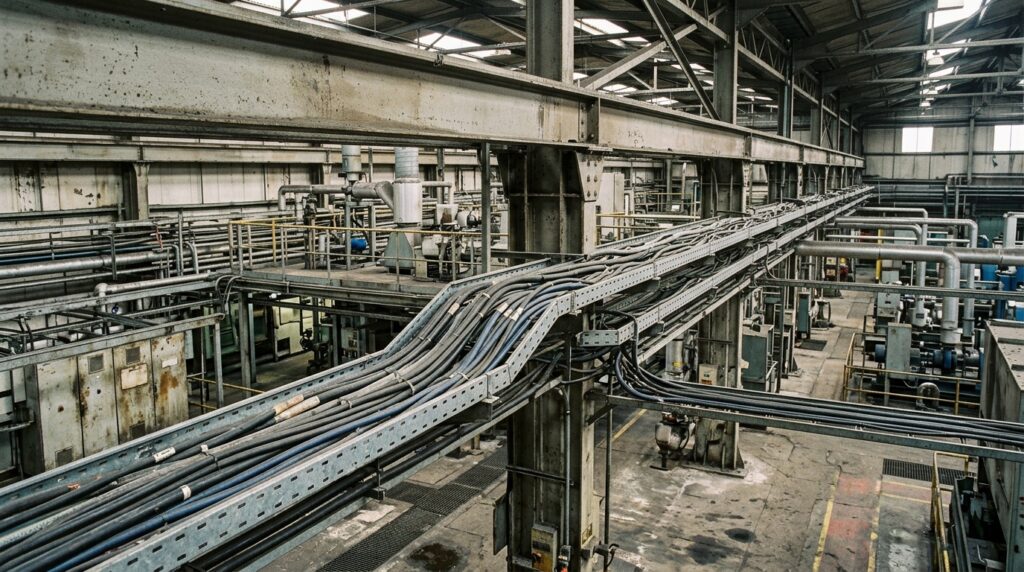
Cost-benefit analysis: a long-term perspective
Of course, the cost-benefit ratio needs to be analyzed with a long-term perspective. Opting for the cheapest option can be expensive later on, with maintenance, rework, or failures. Investing in quality from the start is what guarantees efficiency and less headaches in the future.
What to consider before buying
In summary: before buying, evaluate sizing, specifications, quality, durability, and ease of installation. And, above all, choose a reliable partner. With Induscabos, you have the security of working with products that meet high standards and deliver real performance.