Frequency inverters are widely used in industrial applications because they provide precise control of electric motors. However, during operation, these devices generate harmonic currents and electromagnetic interference that can compromise system performance.
Without the use of the appropriate cable, these effects can cause:
- Excessive engine heating
- Reducing the lifespan of equipment
- Failures in sensitive electronic systems
- Interference with other circuits in the installation.
How to minimize interference in systems with inverters?
To ensure safe and efficient operation, it is essential to control these electrical disturbances.
This is done through three main factors:
1. Efficient path for rip currents
The currents induced by the inverter need a suitable path to return to the system.
Without this, the following may occur:
- Unwanted discharges
- Electrical noises
- Component damage
2. Containment of the electromagnetic field
Interference emissions must be controlled to avoid impacting other equipment.
This is possible with the use of shielded cables, which help to:
- Reduce electromagnetic interference (EMI)
- Improve system performance
- To ensure greater operational stability.
3. Efficient grounding system
A good grounding system is essential for maintaining:
- Potential difference close to zero
- Electrical safety
- System stability
Ideal characteristics of a cable for a frequency inverter.
To ensure performance and safety, the electrical cable for a frequency inverter must have:
- Insulation with a low dielectric constant, reducing capacitance.
- Dedicated conductor for current return.
- Full-length shielding
- Construction suitable for industrial environments.
These factors are essential to avoid interference and increase the lifespan of the equipment.
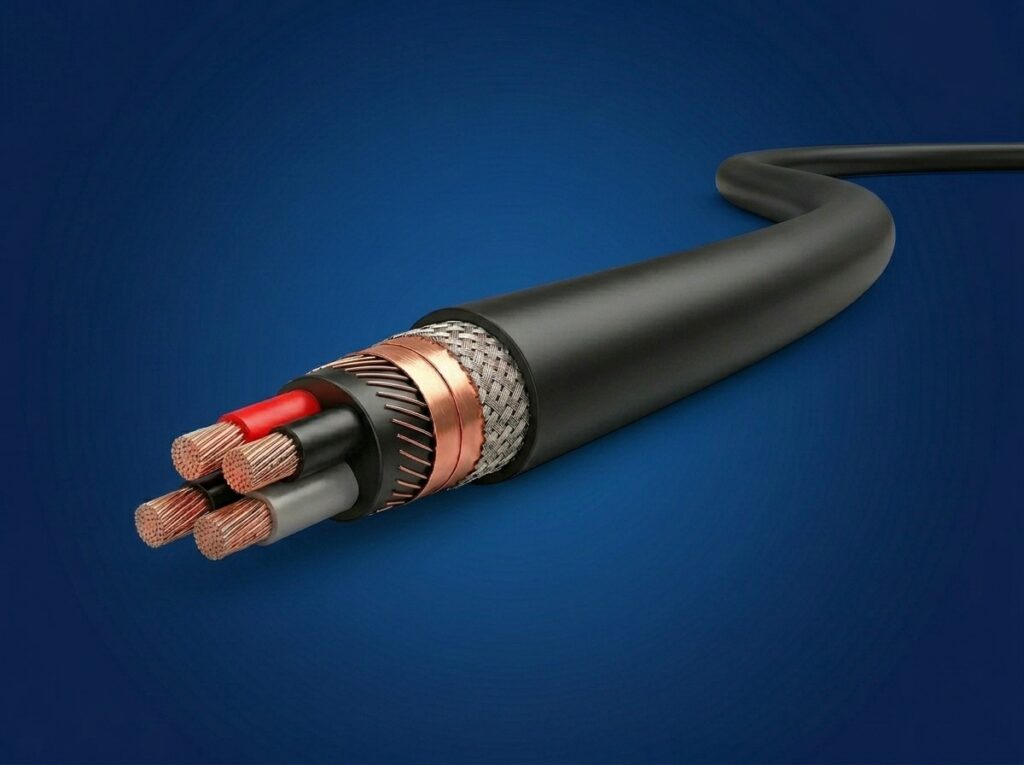
EPROFLEX 90 N/C
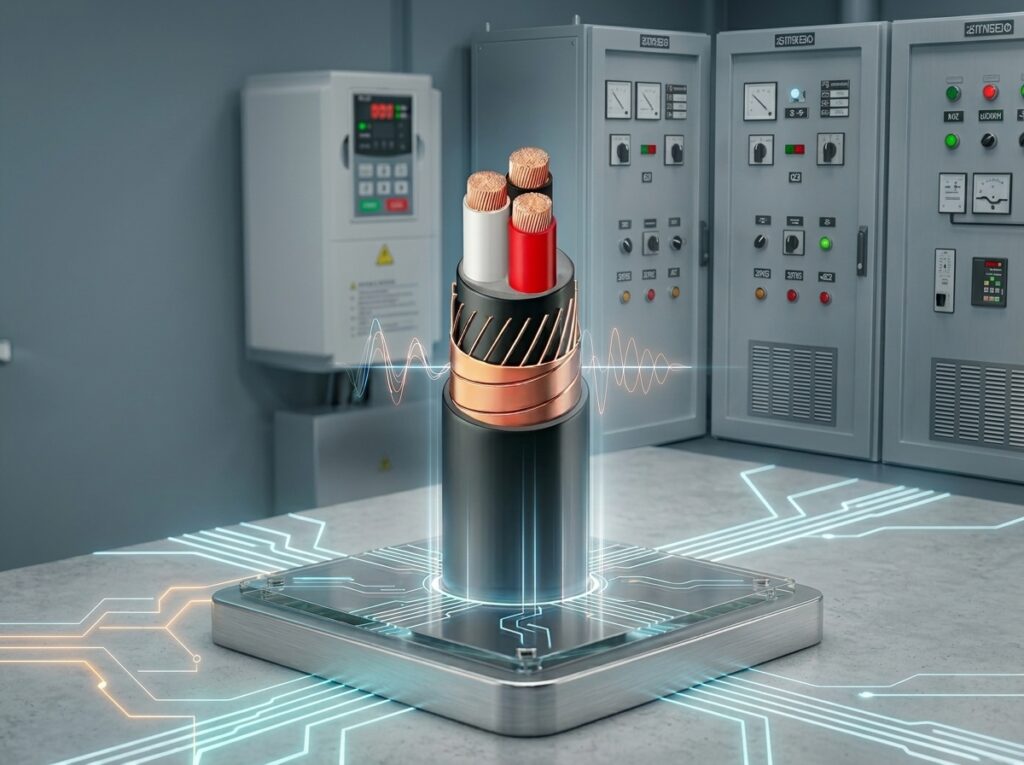
Considering these needs, Induscabos developed a specific solution for this type of application: EPROFLEX 90 N/C for frequency inverters.
The EPROFLEX 90 N/C is a cable designed to offer high performance in systems with inverters, guaranteeing:
- Excellent interference control
- Greater operational reliability
- Enhanced electrical safety
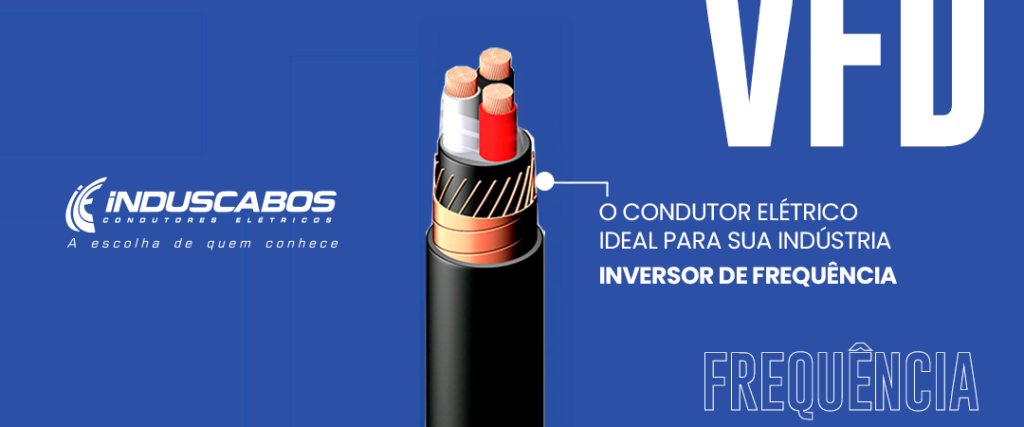
Its construction includes:
- Concentric neutral wire applied under the shielding.
- Copper tape metal shielding
- Robust structure for industrial applications.
Why does choosing the right cable make a difference?
Choosing the right cable isn’t just a technical matter—it’s a critical factor for overall system performance.
Using inappropriate cables can lead to:
- Unplanned stops
- High maintenance costs
- Reduction in energy efficiency
On the other hand, a cable specifically designed for inverters ensures:
- Greater durability
- Less interference
- Better engine performance
In applications with frequency inverters, every detail matters — and the electrical cable is one of the most important.
Investing in a suitable solution, such as the EPROFLEX 90 N/C from Induscabos, guarantees efficiency, safety, and reliability for your operation.