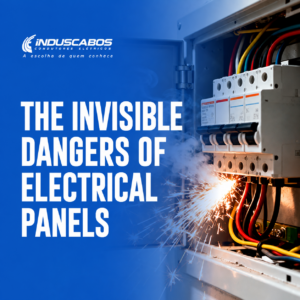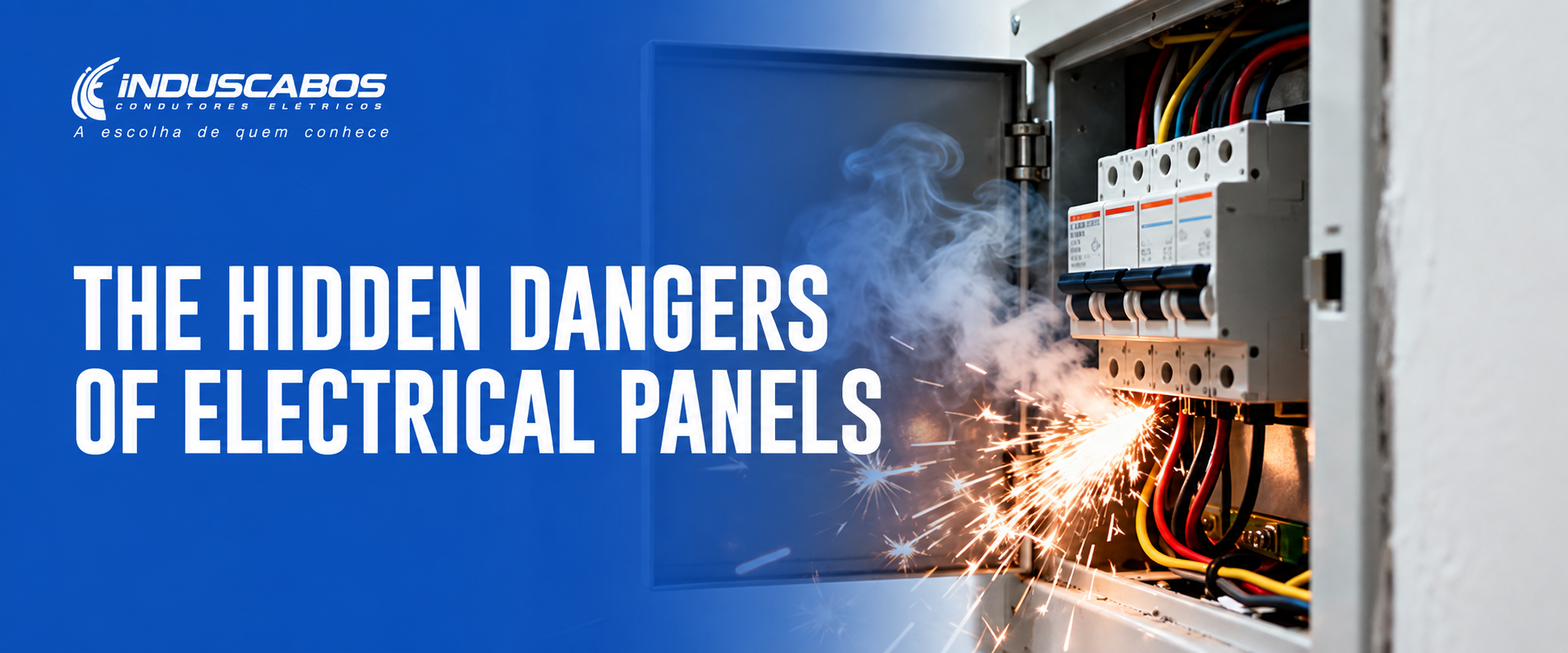
Safety in the electrical panel deserves attention even when the installation appears to be operating normally. In many cases, signs of wear, heating, or failure do not appear immediately, allowing problems in the electrical wiring and internal components to go unnoticed for a long time.
The electrical panel is a central point of the electrical installation because it concentrates circuit distribution and helps organize system protection. When there are assembly faults, inadequate connections, or components performing below expectations, operation may continue to appear stable while risks accumulate over time.
Therefore, talking about safety in the electrical panel does not mean only preventing visible failures. It means understanding how material quality, the correct application of electrical cables, and preventive maintenance influence installation reliability, component durability, and the reduction of incidents such as short circuits and fires.
Why the electrical panel requires technical attention
The electrical panel is not merely a point through which power passes. It organizes circuits, concentrates connections, and allows protective devices to operate. When properly specified and assembled, it contributes to installation performance and makes potential faults easier to identify. When care is lacking, the problem can remain hidden behind an appearance of normal operation.
In low-voltage installations, small assembly deviations, inadequate tightening, material aging, or incorrect use of components can compromise the system. Users do not always notice these signs in everyday use because the lights remain on, equipment continues operating, and the fault only becomes evident under more critical conditions.
This is precisely why safety in the electrical panel must be treated as part of the installation’s prevention strategy. The assessment should consider the entire system: panel, electrical wiring, connections, protective devices, installed load, and conditions of use over time.
Silent faults that may go unnoticed
Not every electrical problem causes an immediate shutdown. In many situations, the installation shows subtle signs before a more serious failure occurs. These signs may be related to connection heating, insulation aging, poorly executed splices, or unsuitable material selection for the application.
When electrical cabling operates under unfavorable conditions, wear tends to accumulate. This can increase the likelihood of poor contact, rising temperature, and circuit instability. In such situations, the risk of short circuit increases, as does the possibility of equipment damage and operational interruptions.
Some signs require immediate attention from a qualified professional, such as a burning smell, flickering lights, abnormal heating in components, repeated tripping, and unusual noises from the panel. These indications should not be ignored because they may point to faults that require technical assessment.
- Burning smell near the panel or circuits
- Flickering lights or noticeable operating variations
- Frequent tripping without an apparent cause
- Abnormal heating in cables, connections, or devices
- Unusual noises coming from the electrical panel
How electrical cabling influences the risk of short circuit and electrical fire
Electrical cabling is one of the most important elements for safety in the electrical panel and throughout the installation. When electrical cables are not suitable for the application, when unnecessary splices are present, or when assembly does not follow good practices, the system may become more susceptible to insulation faults, heating, and performance loss.
It is important to emphasize that a wiring problem does not, by itself, mean that a fire will occur. However, poorly managed electrical faults can increase the risk of short circuit and create unfavorable conditions for installation safety. Therefore, prevention and inspection are essential measures.
Unnecessary splices should be avoided whenever possible because each additional connection point can represent another area requiring technical attention. The more connections there are, the greater the need for proper execution, organization, and periodic verification. In industrial, commercial, and residential projects, reducing weak points helps improve system reliability.
Correct selection of electrical cables also affects installation durability. The material must be compatible with the application, environment, and installation method. When selection is made without technical criteria, the installation may still operate, but with a smaller safety margin and greater exposure to failures over time.
Component quality and correct application make a difference
Electrical safety depends on the entire system. It is not enough to look only at the electrical panel or only at the cables. Reliability comes from compatibility between components, proper execution, and preventive maintenance. A well-planned system considers the function of each element and avoids improvisations that may compromise performance.
In this context, the quality of electrical cables is decisive. Cables suitable for the installation contribute to more stable distribution, better circuit organization, and lower exposure to faults associated with inappropriate material use. This is especially relevant in environments where the installation must support continuous operation and more rigorous maintenance.
Flexibility is also an important factor in many applications. In low-voltage installations, more flexible cables can facilitate routing, internal organization, and assembly in spaces with physical limitations. This helps reduce improper mechanical stress during installation and can contribute to a cleaner finish with less need for improvised interventions.
Within this context, Induscabos’ Duflex cable can be considered in low-voltage projects that require attention to flexibility and installation organization. Cable selection must always respect the project characteristics and the assessment of a qualified professional, without replacing technical sizing and application criteria.
When the material is suitable and the installation is carried out with proper criteria, the result tends to be a more reliable system with better durability and less need for future corrections. This does not eliminate the need for inspection, but it strengthens the foundation on which safety is built.
Preventive maintenance and professional inspection reduce surprises
Preventive maintenance is one of the most effective ways to preserve safety in the electrical panel. Instead of waiting for a failure to appear, periodic inspection makes it possible to identify signs of wear, connections that need review, aging components, and conditions that may affect installation performance.
This type of care is especially important in industrial and commercial environments and in buildings with intensive use, where electrical demand may vary over time. Changes in load, circuit expansions, and changes in how spaces are used require technical monitoring to prevent the installation from becoming outdated in relation to actual operation.
Inspections and interventions should be performed by qualified professionals. This is essential to avoid additional risks, preserve system integrity, and ensure that any correction is based on technical criteria. Opening, dismantling, or repairing the panel without proper knowledge can worsen the problem instead of solving it.
Suitable materials, correct installation, and periodic inspections form an important combination for safety and installation durability. When these three points work together, the system tends to operate with greater stability and less exposure to silent faults.
- Periodic inspection by a qualified professional
- Verification of connections, heating, and signs of wear
- Suitability of electrical cables for the application
- Correction of unnecessary or poorly executed splices
- Monitoring changes in load and installation use
Conclusion: electrical safety results from design, materials, and maintenance
Safety in the electrical panel does not depend on a single factor. It results from the combination of sound design, suitable components, compatible electrical cabling, correct assembly, and preventive maintenance. Even when the installation appears to operate normally, silent faults may be developing and deserve technical attention.
Signs such as a burning smell, flickering lights, abnormal heating, and repeated tripping should be treated as alerts requiring professional assessment. Likewise, unnecessary splices, unsuitable cables, and incorrectly applied components can compromise system reliability and increase exposure to short circuits and fires.
In low-voltage installations, material selection directly affects durability and performance. In this context, Induscabos provides solutions for the B2B market, supporting projects that require technical attention, organized installations, and correct specification of electrical cables.