When we think about sizing an electrical cable, it is common to assume that knowing the equipment’s power and the electrical current it will consume is enough. However, there is another fundamental factor to ensure the safe and efficient operation of the installation: voltage drop.
Ignoring this criterion can result in equipment operating below the proper voltage, reducing its performance, shortening its service life and even causing failures in the electrical system.
What is voltage drop?
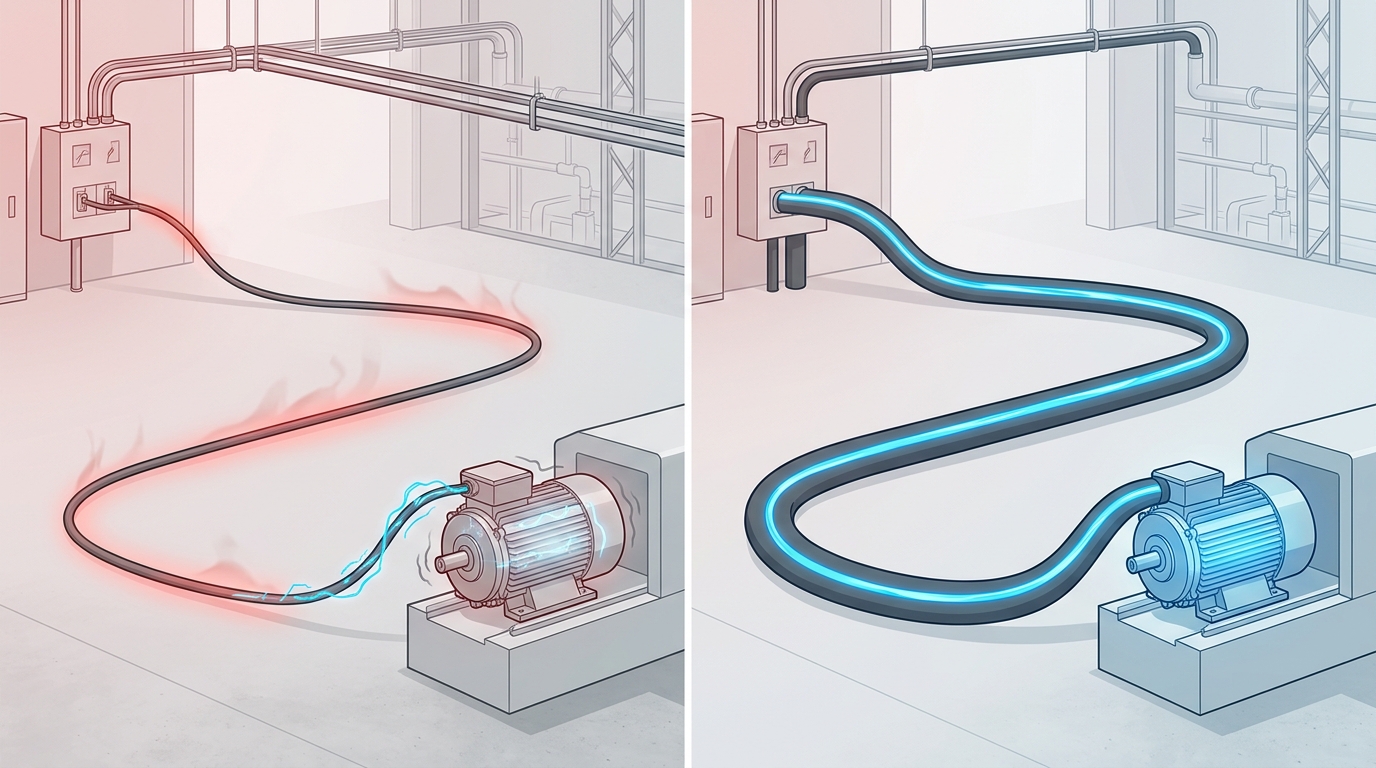
Voltage drop is the difference between the voltage supplied at the origin of the installation and the voltage that effectively reaches the equipment. In practice, whenever electrical current travels through a conductor, a small voltage loss occurs due to the electrical resistance of the cable.
When the distance is short, this loss is usually almost imperceptible. Imagine a home where the distribution board is close to the equipment. If the supplied voltage is 220 V, the voltage received by the equipment will be very close to that value.
On the other hand, as the distance increases, voltage drop also increases. That is exactly why rural installations, industrial warehouses, pumping systems and large areas require special attention during cable sizing.
Why does distance have such a strong influence?
Every electrical conductor offers resistance to the flow of current. The longer the cable, the greater its electrical resistance and, consequently, the greater the voltage drop.
In other words:
- The greater the distance, the greater the electrical resistance;
- The greater the electrical resistance, the greater the voltage drop;
- The greater the voltage drop, the greater the risk of improper equipment operation.
A practical example
Imagine a piece of equipment that requires a 220 V power supply. If it is installed close to the power source, a certain cable may perfectly meet the current demand.
Now imagine that this same equipment is installed 100 meters away. Even if it consumes the same electrical current, the longer distance traveled by the energy will significantly increase the voltage drop.
In this case, the initially selected cable may no longer be sufficient. To compensate for this loss, it is often necessary to use a larger cross-section, reducing the electrical resistance of the circuit.
Sizing does not depend only on current
A common mistake is to consider only electrical current when choosing a cable. In reality, sizing must take several technical criteria into account, including:
- Design current;
- Current-carrying capacity of the cable;
- Allowable voltage drop;
- Operating temperature;
- Installation method;
- Circuit grouping;
- Ability to withstand short-circuit currents.
Among all these factors, voltage drop is one of the most important criteria in low-voltage installations.

What does the standard say?
NBR 5410 establishes limits for voltage drop in low-voltage electrical installations. In general, the recommendation is that the voltage drop between the origin of the installation and the points of use remains within the limits defined by the standard.
Therefore, after choosing the cable cross-section based on electrical current, it is necessary to verify whether that same cross-section also meets the voltage drop criterion. If the calculated result exceeds the permitted limit, the usual solution is to increase the cable size and perform a new calculation.
What happens when voltage drop is excessive?
When the voltage reaching the equipment is below the required value, several problems may occur:
- Equipment malfunction;
- Reduced motor efficiency;
- Increased heating;
- Difficulty starting;
- Reduced service life of components;
- Energy waste;
- Operational failures.
For this reason, respecting voltage drop limits is not only a technical requirement, but also a matter of safety and performance.
How to minimize voltage drop?
There are some strategies that help reduce this effect:
- Use cables with the proper cross-section;
- Reduce distances whenever possible;
- Use high-quality conductive materials;
- Perform project calculations correctly;
- Follow the recommendations of technical standards.
Each installation has specific characteristics, which is why cable sizing must be carried out individually.
Conclusion: why voltage drop cannot be ignored
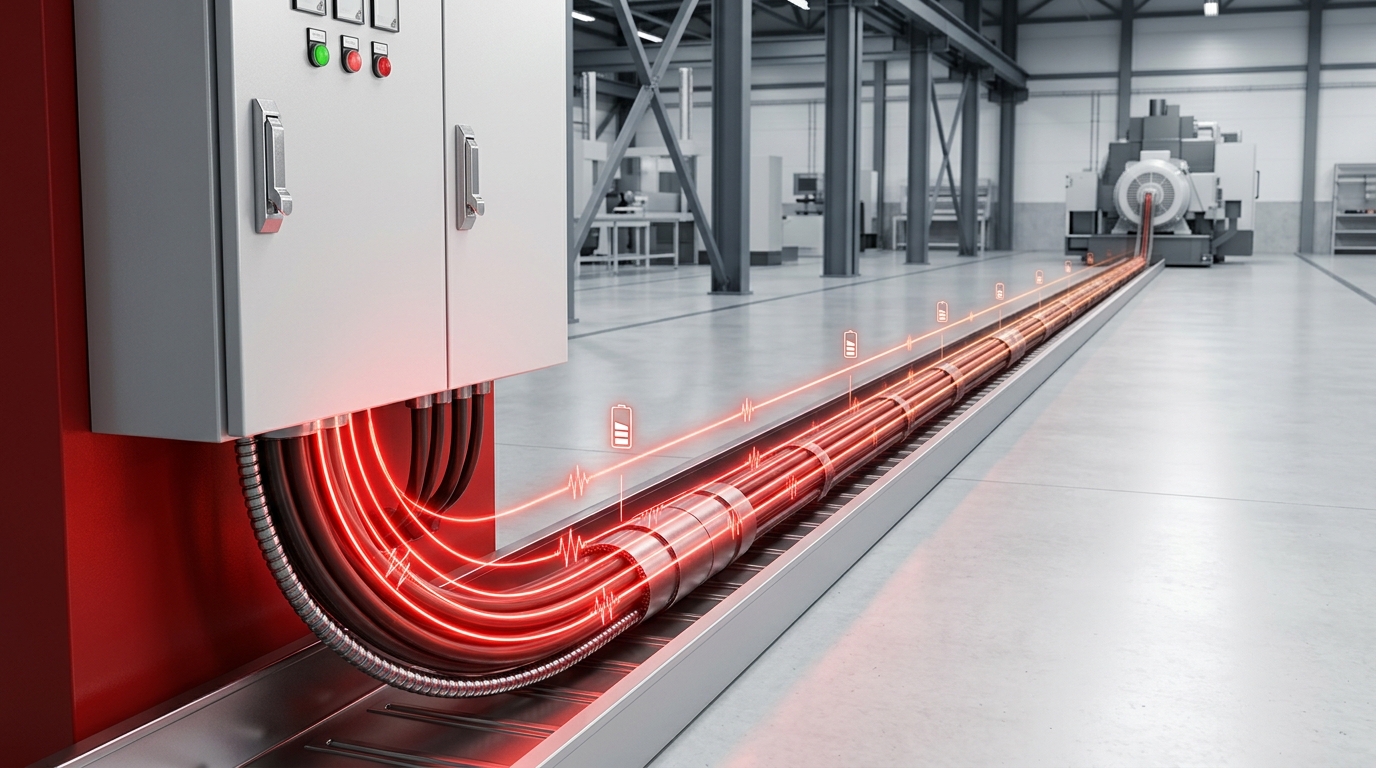
Electrical cable sizing goes far beyond simply analyzing electrical current. Voltage drop is one of the most important criteria to ensure that energy reaches equipment under proper operating conditions.
By correctly considering factors such as distance, electrical resistance and regulatory limits, it is possible to design safer, more efficient and more reliable installations. At Induscabos, technical knowledge and quality go hand in hand to offer solutions that meet the requirements of a wide range of electrical projects.