Did you know that electrical cables can last between 20 and 30 years?
Although this lifespan is common under ideal design and operating conditions, it is not guaranteed. In practice, cable durability depends directly on technical factors such as the quality of the conductor and insulator materials, the correct sizing of the installation, environmental conditions (temperature, humidity, chemical agents or sun exposure), and the level of electrical load over time. Furthermore, frequent overloads, voltage variations, mechanical vibration, and lack of preventive maintenance can significantly accelerate insulation aging, reducing system reliability and increasing the risk of electrical failures.
And that’s precisely where the risk lies.
Old electrical cables were designed for a completely different reality than the current one.
Back then, the following were used:
- Materials with lower thermal performance
- Insulation with more limited technologies
- Less demanding technical standards
Furthermore, equipment connected to electrical grids was much less complex.
Today, modern applications require more robust solutions, such as…
The problem: the installation is a thing of the past.
While technology has evolved, many electrical installations have remained the same. The impact of this obsolescence mainly involves:
- Increased demand for energy
- More sensitive equipment
- Increased performance and safety requirements.
Old cables may not withstand these new conditions, leading to overheating, reduced efficiency, and risks of failures or short circuits when using equipment that demands more power.
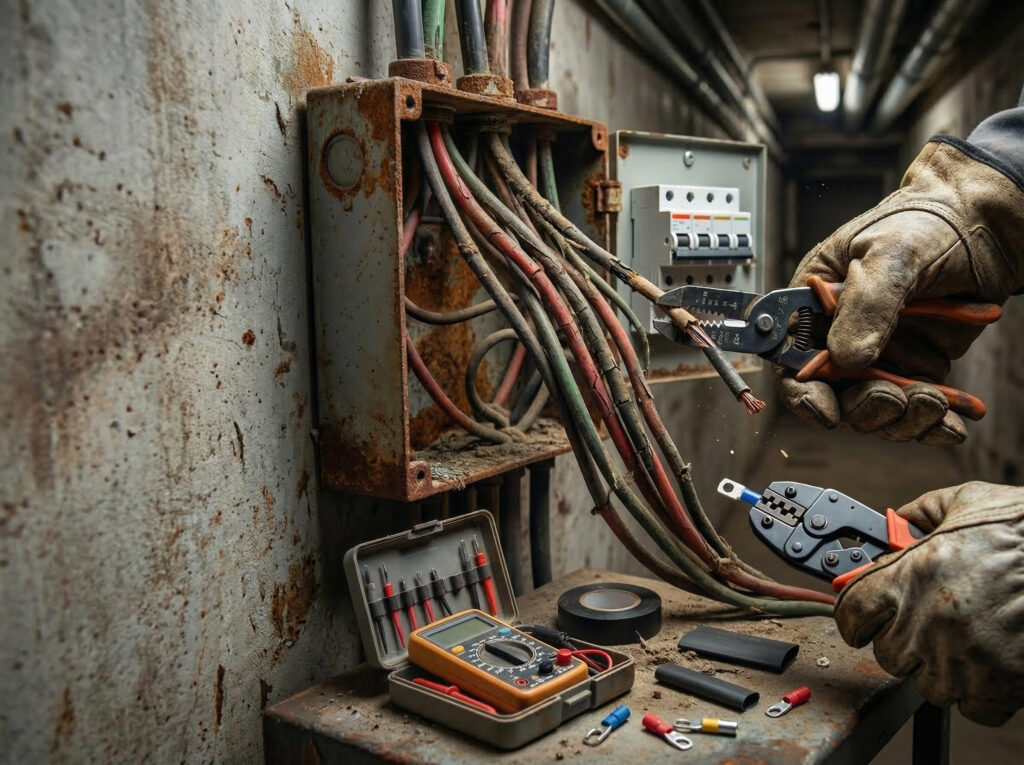
Why are maintenance and upgrading of electrical cables essential in an installation?
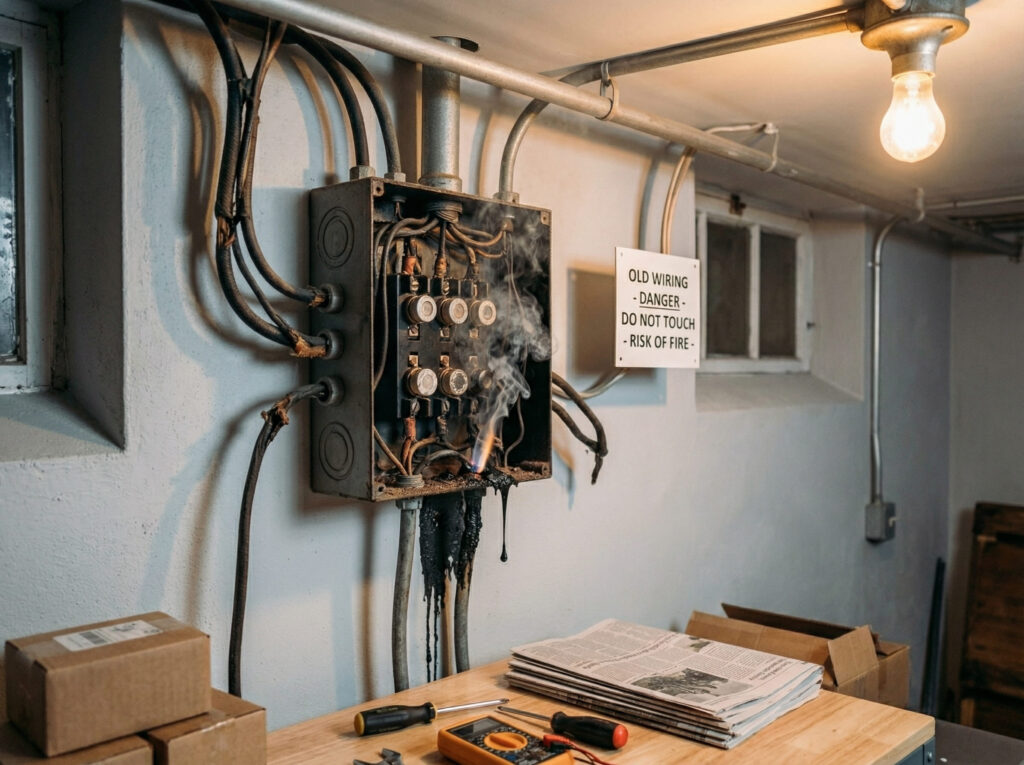
Replacing or upgrading old cables is not just an improvement, but a matter of safety. Upgrading the electrical infrastructure allows for:
✔ Better equipment performance
✔ Reducing electrical risks
✔ Greater energy efficiency
✔ Compliance with current standards
How do I know when it's time to replace the cables?
Some signs indicate that your installation may be outdated, so it’s always important to periodically check the entire network, observing if cables that are more than 20 years old and may be outdated, and if the network frequently overheats. Power outages or instability, and a recent increase in load on the installation are also points to be observed and, in some cases, require technical evaluation.
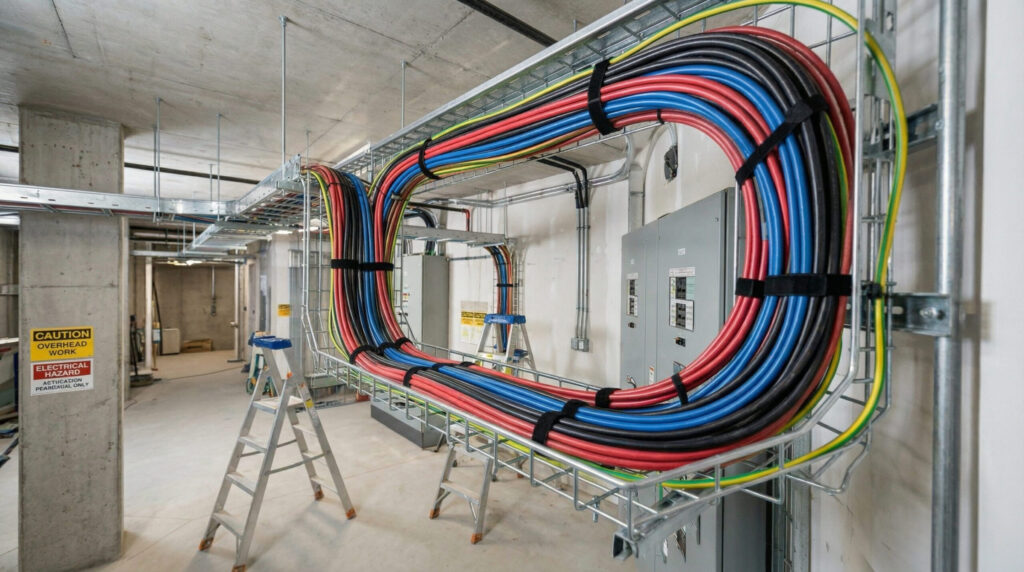
Count on Induscabos! Energy has evolved, and your installation needs to keep up. Ignoring old cables can compromise not only performance but also the safety of the entire operation. Therefore, evaluating and upgrading cables is a smart and necessary investment.
Induscabos: evolving alongside energy.
For 50 years, Induscabos has been developing solutions that keep pace with the evolution of the electrical sector, offering quality, safety, and reliability for every application.
Want to learn more about the cables in our portfolio? Access here.