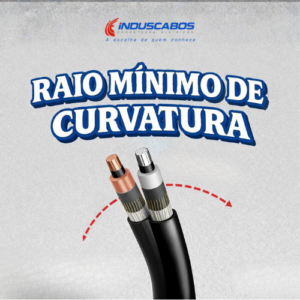
The minimum bending radius is the smallest radius to which a cable can be bent without compromising its structure — and respecting it is essential to ensure the safety and durability of the installation.
Very tight turns can cause:
- Breakdown of semiconductor layers
- Damage to electrical insulation
- Distortions in the electric field
- Increased risk of system failures
Compliance with technical standards and best practices
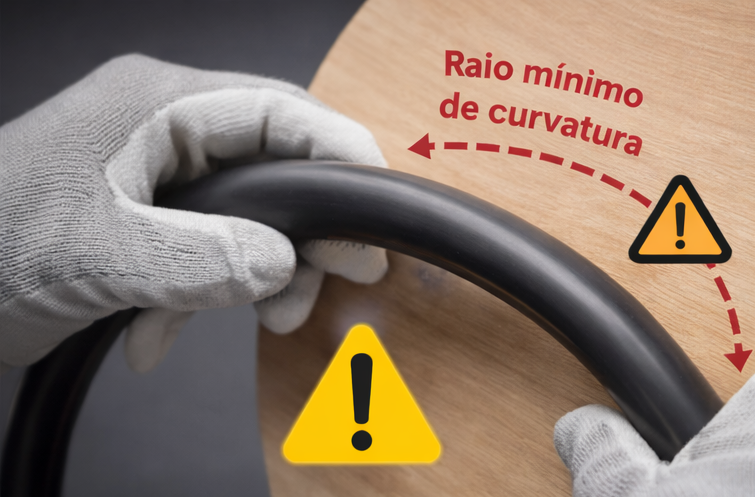
Adherence to technical standards is fundamental to avoiding this type of failure. Standards such as NBR 9511 establish clear criteria regarding the minimum bending radius and other important parameters for the correct installation of electrical cables.
Induscabos cables are developed to rigorously meet these regulatory requirements, offering greater reliability even in the most demanding installations, where bending and mechanical stress control is essential.
The impact of minimum bending radius on the safety of electrical cables.
An incorrectly bent cable can seriously compromise the performance and safety of an electrical installation. The minimum bending radius represents the smallest radius by which a cable can be bent without causing damage to its internal structure, and is an essential parameter for ensuring the durability and reliability of the electrical system.
Failure to meet this requirement can generate excessive mechanical stress during installation, affecting internal cable components and reducing its lifespan.
Risks of excessively tight turns
When the minimum radius of curvature is not respected, several technical problems can occur, such as:
- Breakdown of semiconductor layers
- Damage to electrical insulation
- Distortions in the electric field
- Increased risk of failures in the electrical system
These effects are not always visible at the time of installation, but tend to manifest themselves over time, compromising safety and operational continuity.
Safety and performance from the moment of installation.
Ensuring that cables are installed within recommended technical parameters is a crucial step in preserving the integrity of the electrical system. Observing the minimum bending radius directly contributes to reducing failures, increasing the lifespan of the installation, and improving operational safety.
To better understand, in practice, how bending influences the integrity of electrical cables, check out the demonstration material below.